

Latest figures from the Central Statistical Office (KSH) for February 2026 reveal a 2.3% year-on-year decline in domestic export volumes, contrasted by a 6.7% expansion in imports. The examination of commodity groups underscores that trade dynamics were almost exclusively dictated by the dominance of machinery and transport equipment. This sector contributed 8.3 percentage points to import growth, while tempering the decline in exports by 1.5 percentage points. This trend was primarily fueled by large-scale capital expenditure in manufacturing—most notably within the automotive and battery sectors. The drop in exports was mainly caused by weak sales of manufactured goods, which pulled down total trade by 3.2 percentage points.
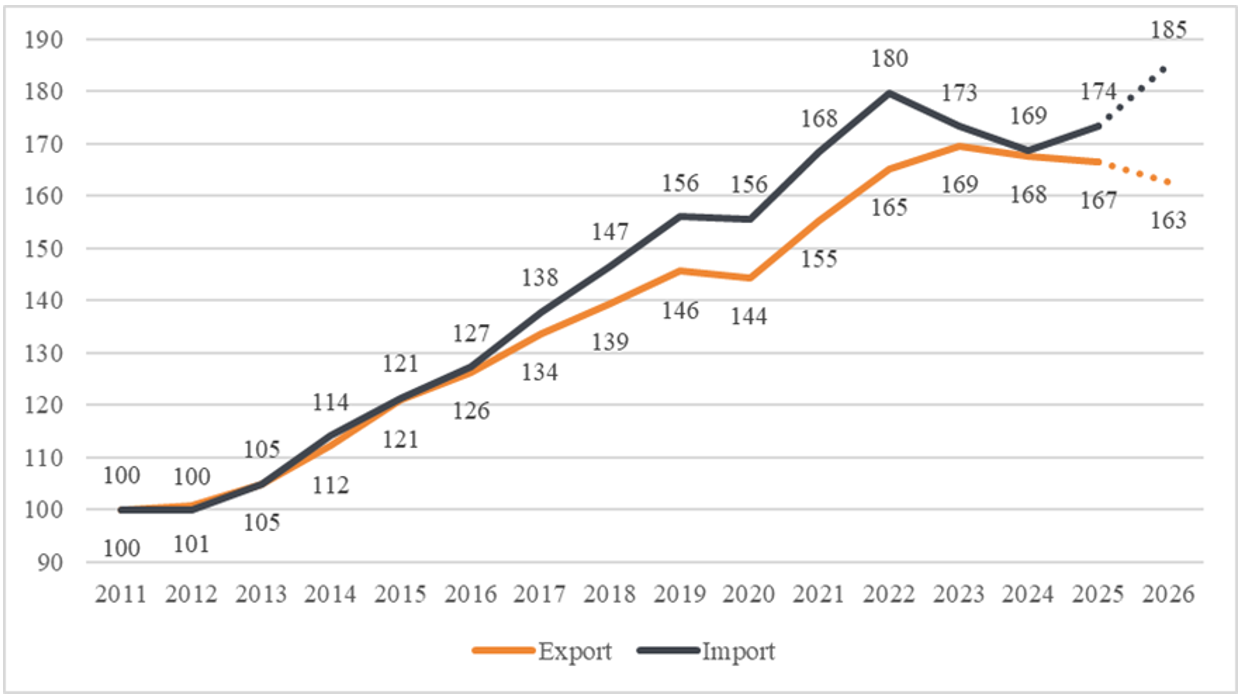
Since the 2018–19 period, the growth rate of import volumes has persistently outpaced that of exports. While a sharp reduction in imports during 2024 briefly aligned the two indices relative to their 2011 base, the gap has since widened once more. Based on current data for 2026, this divergence is poised to deepen further, putting a serious strain on the trade balance.
Volume changes in exports and imports, 2011–2026
(2011=100; 2026 figures are projected based on January–February trends)
Source: KSH, GKI calculation
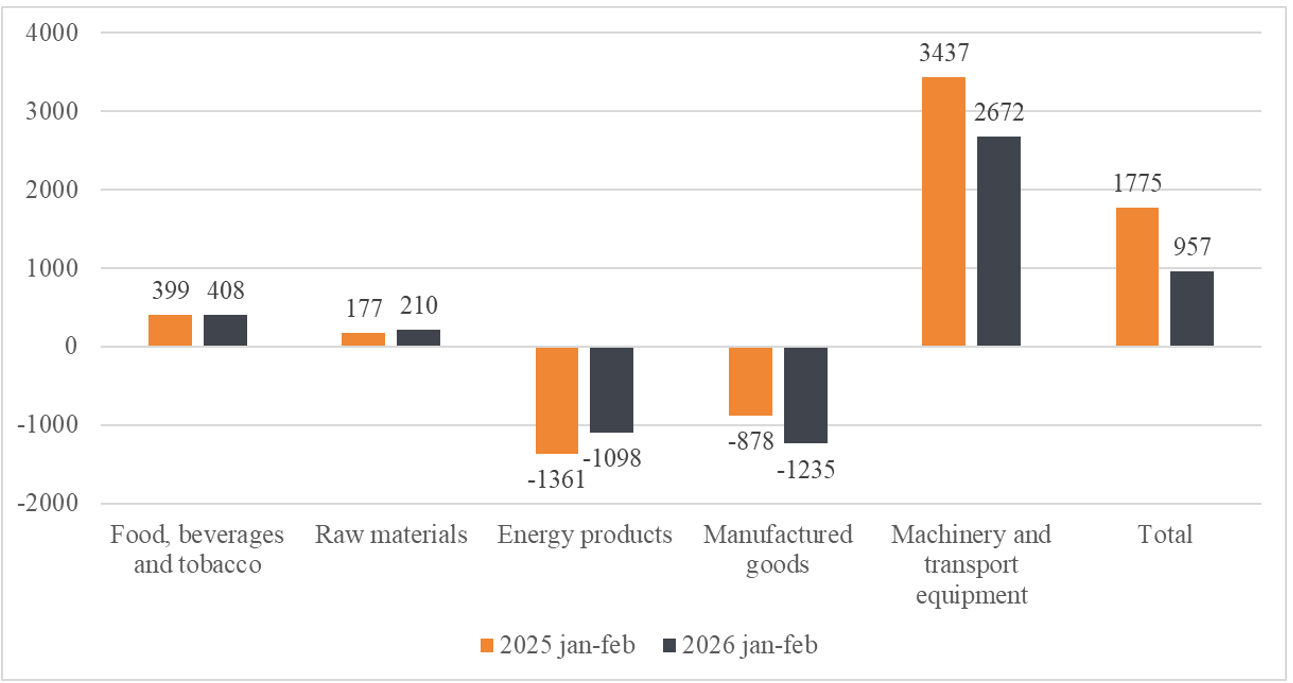
Cumulative energy imports in the first two months of 2026 retreated by €466 million, while exports declined by €202 million compared to the corresponding period of the previous year. Although net energy imports declined, the price volatility triggered by the Iranian conflict- coupled with the low import levels until now -suggests that the replenishment of storage facilities will likely take place at significantly higher price points. This development is set to exert further downward pressure on the trade balance in the coming months. Figures from the first two months of the year highlight a stark divergence in the external balance: the cumulative net export surplus has dropped from €1,775 million a year ago to just €957 million, representing a sharp contraction to 53% of its former value.
Cumulative trade balance by main commodity group (€ million)
Source: KSH
Between February 2025 and February 2026, the 6.1% appreciation of the forint against the euro has been reflected in a 6.9% decrease in the price level of imports. By mitigating imported inflation and stimulating market competition, this effect contributes to keeping domestic prices low.
Overall, it can be concluded that while the stronger forint compared to the previous year ensures more favorable terms of trade and lower imported inflation, improving domestic competitiveness remains essential for future export growth. Rising energy prices and the lack of strengthening demand in export markets suggest a deterioration of the foreign trade balance for the remainder of the year. This trend could be reversed if the entry of new automotive and battery production capacities significantly boosts exports; however, this is only a realistic possibility toward the end of 2026.